1950s shirtwaist dress, cotton gingham, remade by Chains with hand-applied interventions.
Category: Remade
File Under: #1950s, #Housework, #MaintenanceArt, #DomesticLabor
Description
A 1950s shirtwaist dress with shawl collar, short cap sleeves, and a gathered waist falling just below the knee. Cut for ease of movement and daily wear, the form is emblematic of mid-century domestic labor—designed to be functional, presentable, and endlessly repeatable.
The juniper green and azure blue gingham references a visual language historically associated with cleanliness, order, and rural optimism. Gingham functioned as both symbol and uniform: a fabric tied to ideals of femininity, thrift, and quiet endurance. Here, that symbolism is retained and disrupted.
Interventions include:
Replacement of all front buttons with mismatched post-consumer buttons, each sewn by hand using intentionally clashing thread.
A hand-stenciled and painted textile patch affixed at the nape of the neck, one of three produced.
A permanently affixed safety pin, hand-stitched to the left collar, threaded with letter beads reading “ACAB.”
The right collar hand-studded with small silver-tone pyramid studs.
The dress was recovered from an estate sale, found folded in a trunk of stored clothing. It was thoroughly hand washed using baking soda and lemon to neutralize odour and restore colour without industrial processing. Faint beach stains remain throughout—evidence of use, exposure, and repetition. These marks are preserved as part of the object’s history, foregrounding domestic labor that is typically minimized, cleaned away, or rendered invisible.
The original garment’s function—as workwear designed for routine and repetition—remains legible alongside the visible additions and repairs made to its surface over time.
1950s shirtwaist dress, cotton gingham, remade by Chains with hand-applied interventions.
Category: Remade
File Under: #1950s, #Housework, #MaintenanceArt, #DomesticLabor
Description
A 1950s shirtwaist dress with shawl collar, short cap sleeves, and a gathered waist falling just below the knee. Cut for ease of movement and daily wear, the form is emblematic of mid-century domestic labor—designed to be functional, presentable, and endlessly repeatable.
The juniper green and azure blue gingham references a visual language historically associated with cleanliness, order, and rural optimism. Gingham functioned as both symbol and uniform: a fabric tied to ideals of femininity, thrift, and quiet endurance. Here, that symbolism is retained and disrupted.
Interventions include:
Replacement of all front buttons with mismatched post-consumer buttons, each sewn by hand using intentionally clashing thread.
A hand-stenciled and painted textile patch affixed at the nape of the neck, one of three produced.
A permanently affixed safety pin, hand-stitched to the left collar, threaded with letter beads reading “ACAB.”
The right collar hand-studded with small silver-tone pyramid studs.
The dress was recovered from an estate sale, found folded in a trunk of stored clothing. It was thoroughly hand washed using baking soda and lemon to neutralize odour and restore colour without industrial processing. Faint beach stains remain throughout—evidence of use, exposure, and repetition. These marks are preserved as part of the object’s history, foregrounding domestic labor that is typically minimized, cleaned away, or rendered invisible.
The original garment’s function—as workwear designed for routine and repetition—remains legible alongside the visible additions and repairs made to its surface over time.
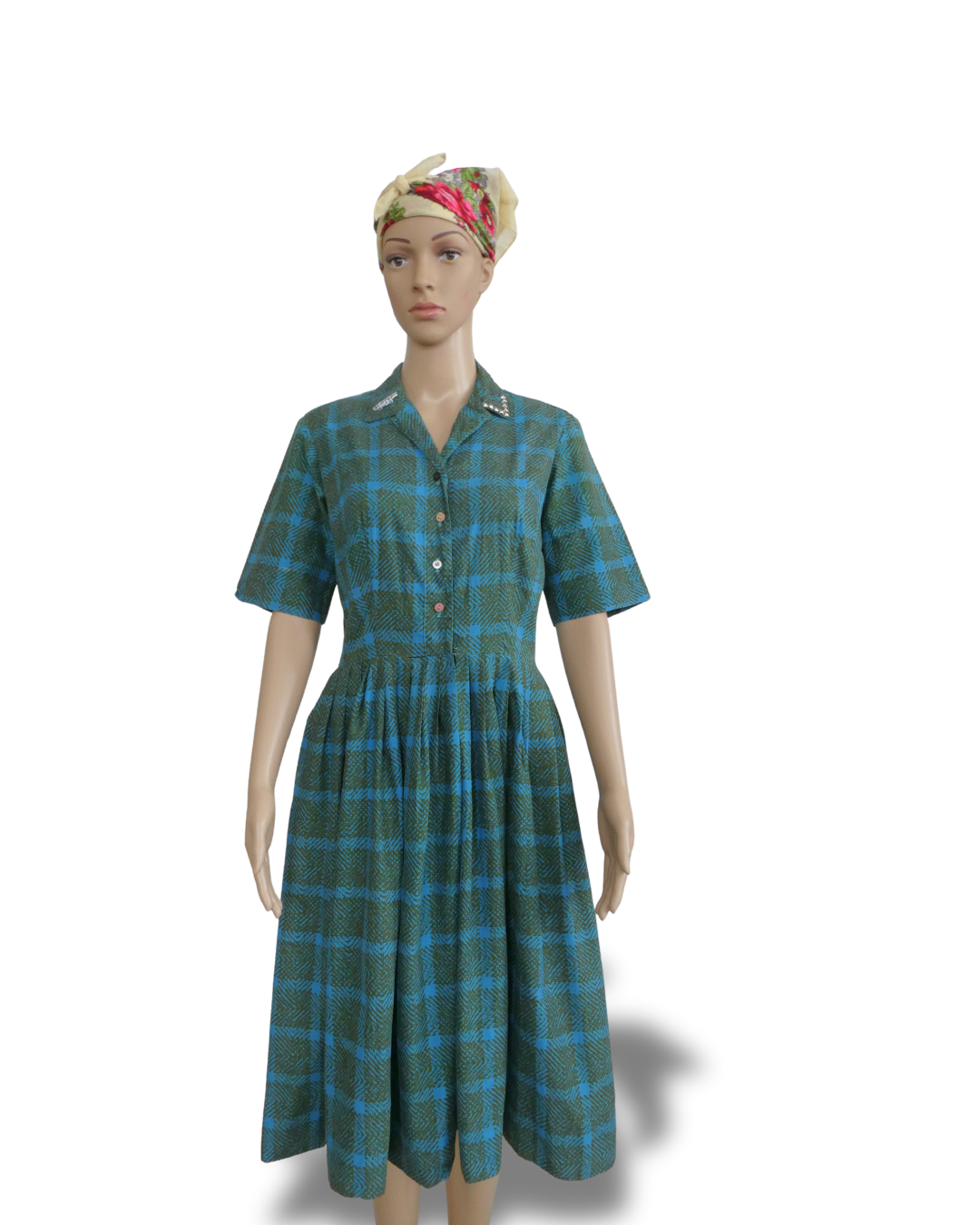 Image 1 of 6
 Image 2 of 6
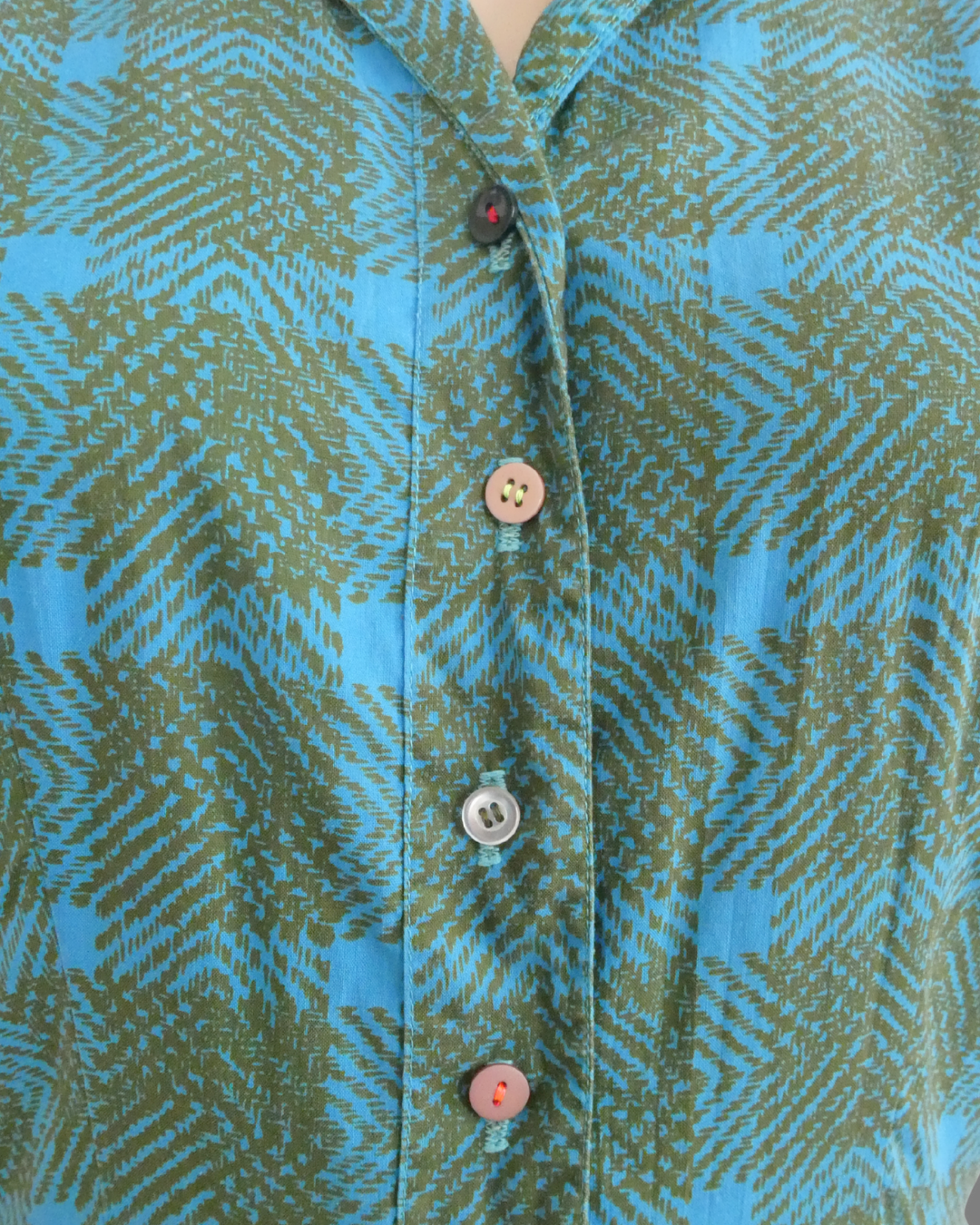 Image 3 of 6
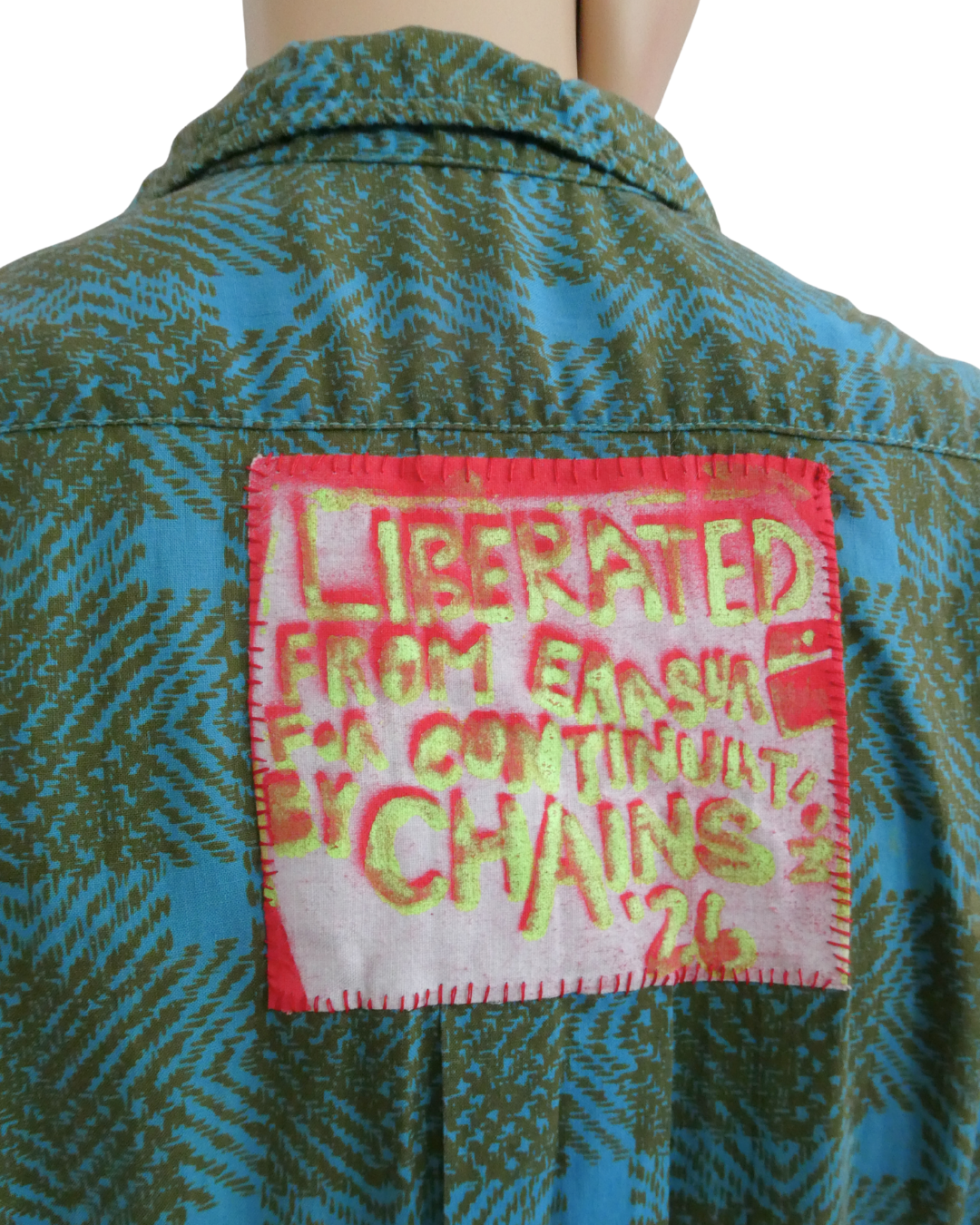 Image 4 of 6
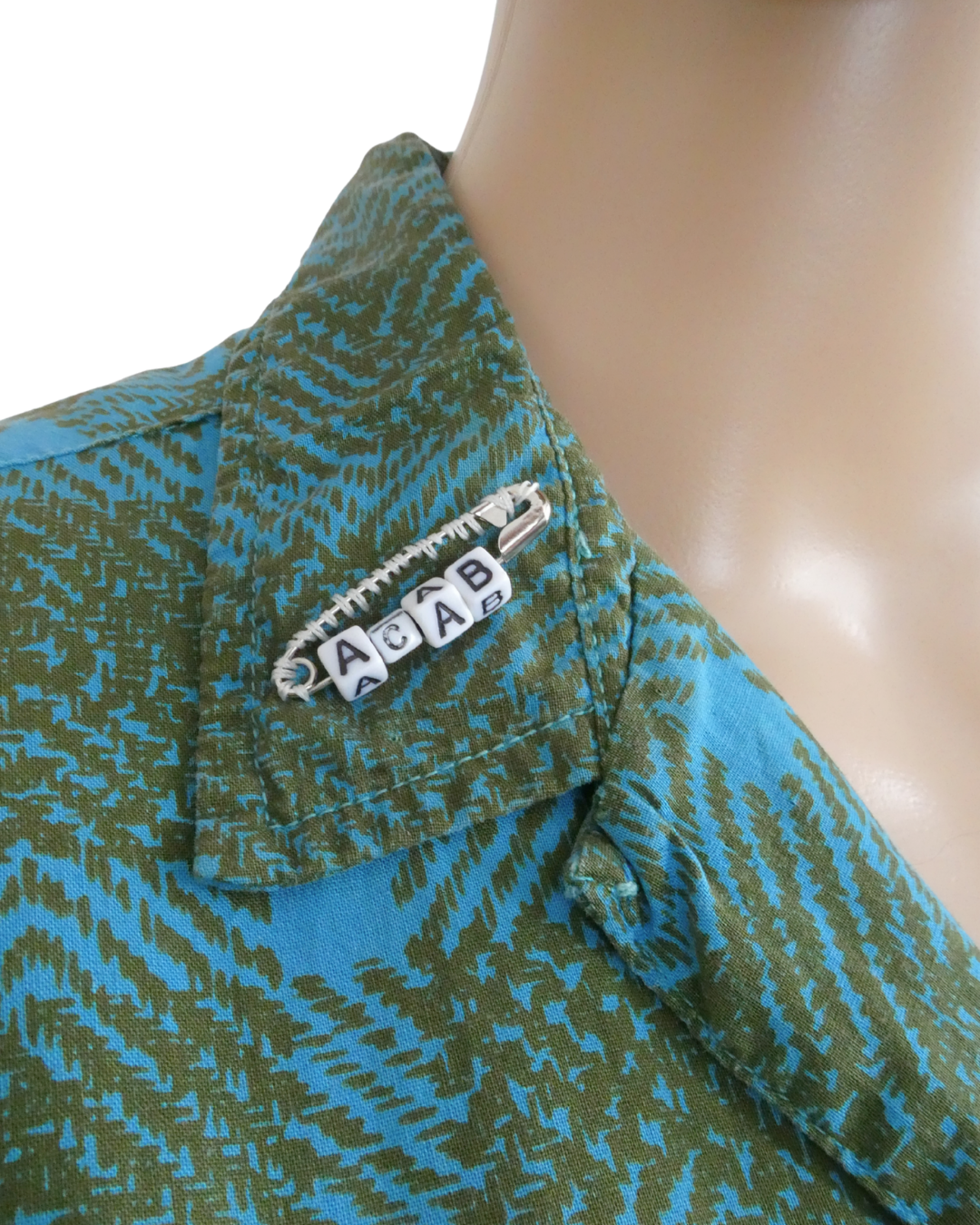 Image 5 of 6
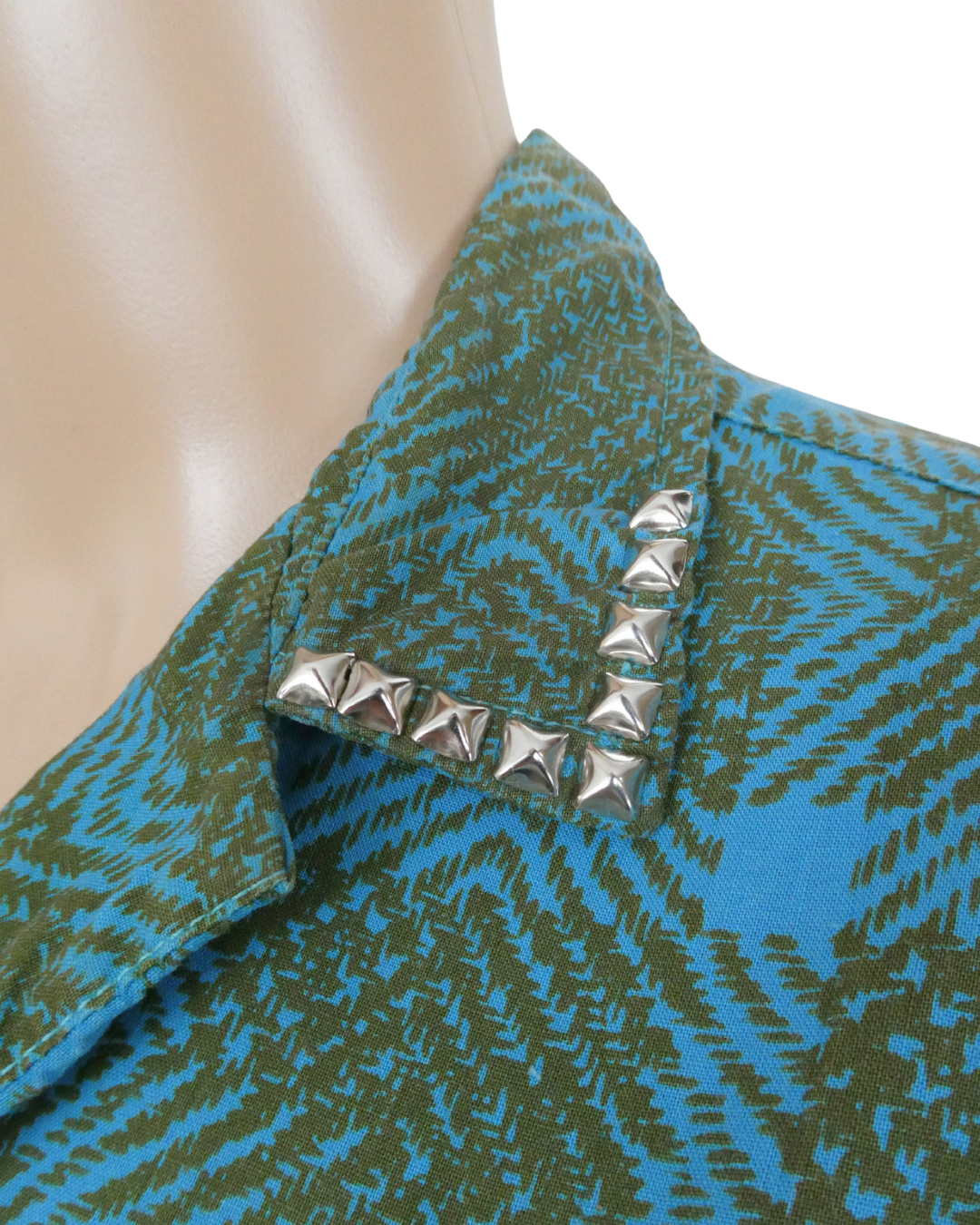 Image 6 of 6