Chains Cut
Context
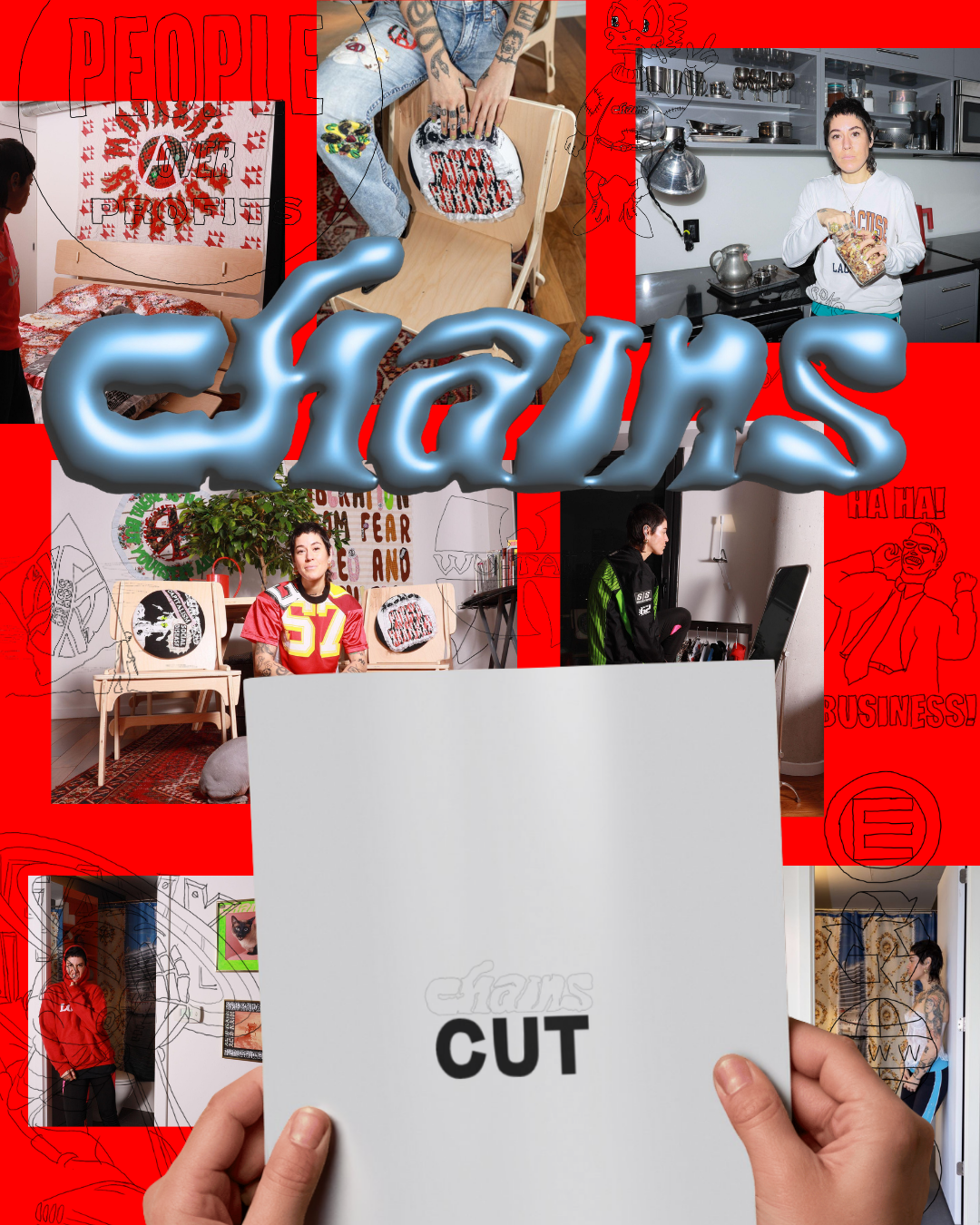
In summer 2023, Chains began Chains Cut as a sustained studio practice exploring sustainable domestic craft within the conditions of frequent relocation and rental living. Collaborating with Erik LeBrun of Agile Fabrication (Haute-Aboujagane, New Brunswick), the work developed a modular home decor and furniture system crafted from repurposed garments, deadstock fabric, and found materials.
Rather than producing objects for stylistic consumption, the project treated the home as a living system of material care and adaptation—one that foregrounds labor, material history, and everyday utility over disposability. Textiles were produced through hand-sewn Mennonite-influenced quilting techniques using salvaged fabrics; furniture pieces were designed with disassembly and transportability in mind to reflect conditions of mobility and reuse.
The series emerged as both a material inquiry and a practical systems prototype generated through iterative negotiation between technique, constraint, and domestic need—shaping objects that are simultaneously functional, crafted, and reflective of a repair-first ethic.
Responsibilities
Material sourcing and preparation from post-consumer clothing, deadstock, and found objects
Hand sewing and quilting using non-industrial techniques
Furniture and object design in collaboration with Agile Fabrication
Documentation of methods, criteria, and decision logic across all components
Ensuring modularity, transportability, and ecological intentionality in every piece
Afterlife
Chains Cut remains active as both practice and evidence of a sustainable domestic infrastructure approach. Its components were designed to move with their inhabitant, to be reconfigured, and to continue serving as evidence for alternative models of material care in everyday life.
The work continues to inform ongoing studio inquiries into repurposed material systems, sustainable craft methods, and the politics of domestic objecthood in post-consumer contexts.