Cassette edition of Pussy Whipped, recorded in 1992 and released by Kill Rock Stars in 1993.
Category: Curated
File under: #RiotGrrrl, #PunkMedia, #CassetteCulture, #1990s
Description
Cassette release of Pussy Whipped, recorded at Avast! Studios in October 1992 and released in 1993 on Kill Rock Stars.
Bikini Kill were central to the Riot Grrrl movement, a feminist punk network that emerged in the early 1990s across the Pacific Northwest and Washington, D.C. Through music, zines, and organizing, the movement addressed sexism within punk scenes and broader culture, foregrounding women’s voices and experiences.
The album includes twelve tracks, among them “Rebel Girl,” “Alien She,” and “Speed Heart.” These recordings circulated alongside zines, flyers, and live shows, forming part of a decentralized media network rather than a commercial release cycle.
Cassette was a practical format for this context: inexpensive to duplicate, easy to distribute by mail or hand-to-hand, and well suited to small labels and self-organized scenes. Copies like this one moved through personal collections rather than retail channels.
This tape shows wear consistent with age and handling. The shell has been cleaned and the tape tested; it remains playable.
Cassette edition of Pussy Whipped, recorded in 1992 and released by Kill Rock Stars in 1993.
Category: Curated
File under: #RiotGrrrl, #PunkMedia, #CassetteCulture, #1990s
Description
Cassette release of Pussy Whipped, recorded at Avast! Studios in October 1992 and released in 1993 on Kill Rock Stars.
Bikini Kill were central to the Riot Grrrl movement, a feminist punk network that emerged in the early 1990s across the Pacific Northwest and Washington, D.C. Through music, zines, and organizing, the movement addressed sexism within punk scenes and broader culture, foregrounding women’s voices and experiences.
The album includes twelve tracks, among them “Rebel Girl,” “Alien She,” and “Speed Heart.” These recordings circulated alongside zines, flyers, and live shows, forming part of a decentralized media network rather than a commercial release cycle.
Cassette was a practical format for this context: inexpensive to duplicate, easy to distribute by mail or hand-to-hand, and well suited to small labels and self-organized scenes. Copies like this one moved through personal collections rather than retail channels.
This tape shows wear consistent with age and handling. The shell has been cleaned and the tape tested; it remains playable.
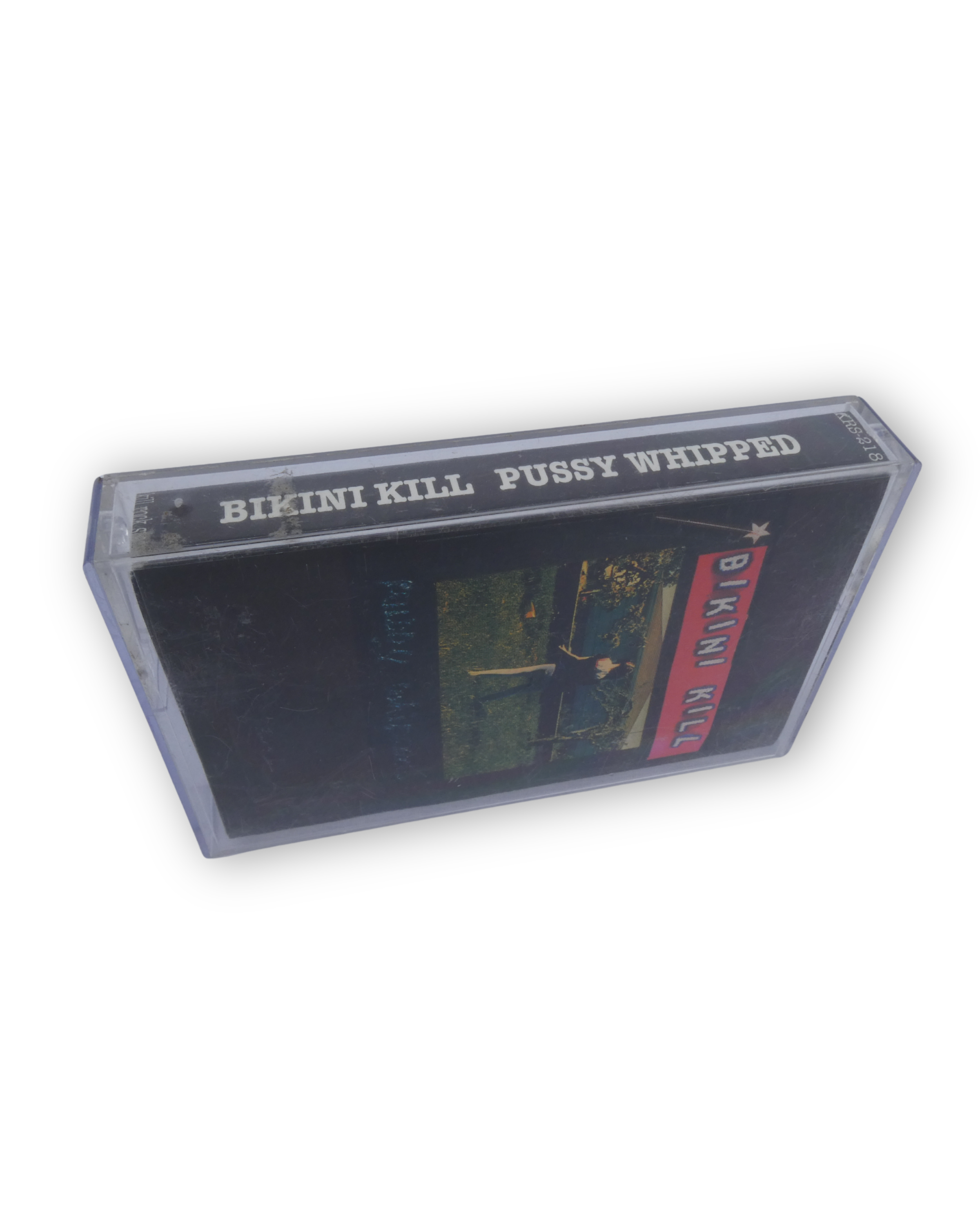 Image 1 of 2
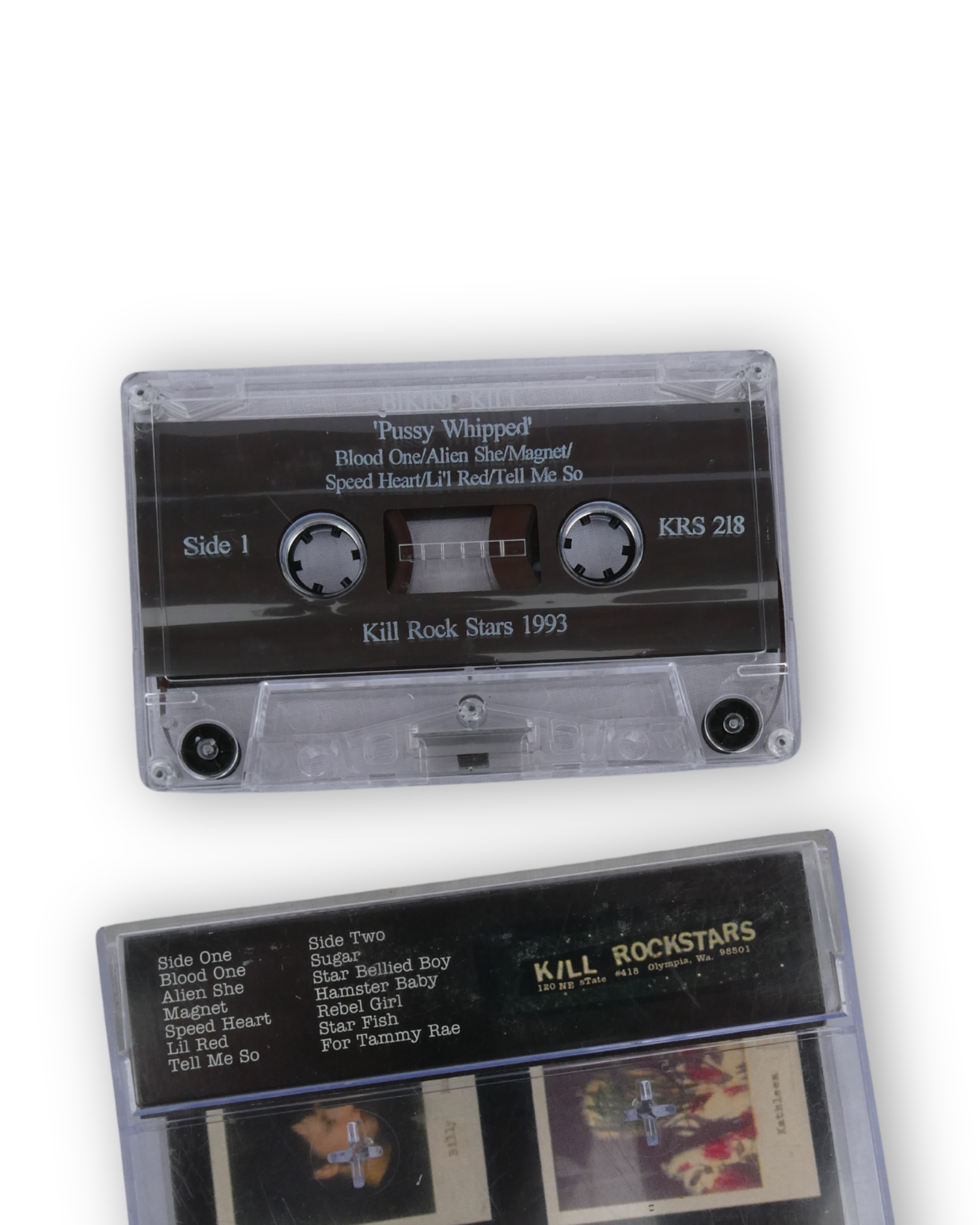 Image 2 of 2