Three vintage issues of Skin Two magazine documenting the development of fetish culture through art, fashion, photography, and club life in the UK and beyond.
Category: Curated
File Under: #SubculturePress, #FetishCulture, #IndependentPublishing, #FashionEphemera, #ArchiveMatter
Description
This stack comprises three original issues of Skin Two, a magazine that functioned not simply as niche publishing, but as an active participant in the formation and documentation of modern fetish culture.
Founded in London in 1983, Skin Two emerged alongside the first SKIN TWO club nights in Soho, operating at the intersection of nightlife, fashion, photography, art, and sexual politics. Long before fetish aesthetics entered mainstream fashion imagery, the magazine served as a connective tissue between underground communities, artists, designers, and clubs—recording the evolution of a subculture largely ignored or misrepresented elsewhere.
Included here are three issues spanning the early 2000s, a period of reflection and self-awareness within the publication:
Autumn Issue 37 (2001) marks a formal shift toward graphic art as cultural production. Featuring a cover by Julian Murphy, this issue is explicitly framed by the editors as the magazine’s first pure art cover—distinguishing illustration and graphic intent from photographic fetish imagery, and signaling a maturation of the genre’s visual language.
Issue 43 (Spring 2003) coincides with the twentieth anniversary of fetish club culture in London. Editorial content situates SKIN TWO not as a passive observer, but as a founding infrastructure—tracing the emergence of fetish fashion, art, and nightlife from basement clubs to international influence.
50th Issue Retrospective (Winter 2004/2005) functions as an internal audit. Editor Tony Mitchell revisits two decades of publishing, acknowledging both the accidental and deliberate ways the magazine became a historical record of an evolving subculture. The issue reflects on design, ethics, memory, and the tension between ephemera and documentation—questions that align closely with archival practice.
Within the Archive, this stack is held as printed evidence of a subculture in the process of narrating itself. These magazines were not produced as artifacts, yet time, circulation, and reuse have allowed them to age into reference points—objects now read as primary documents rather than disposable media.
Three vintage issues of Skin Two magazine documenting the development of fetish culture through art, fashion, photography, and club life in the UK and beyond.
Category: Curated
File Under: #SubculturePress, #FetishCulture, #IndependentPublishing, #FashionEphemera, #ArchiveMatter
Description
This stack comprises three original issues of Skin Two, a magazine that functioned not simply as niche publishing, but as an active participant in the formation and documentation of modern fetish culture.
Founded in London in 1983, Skin Two emerged alongside the first SKIN TWO club nights in Soho, operating at the intersection of nightlife, fashion, photography, art, and sexual politics. Long before fetish aesthetics entered mainstream fashion imagery, the magazine served as a connective tissue between underground communities, artists, designers, and clubs—recording the evolution of a subculture largely ignored or misrepresented elsewhere.
Included here are three issues spanning the early 2000s, a period of reflection and self-awareness within the publication:
Autumn Issue 37 (2001) marks a formal shift toward graphic art as cultural production. Featuring a cover by Julian Murphy, this issue is explicitly framed by the editors as the magazine’s first pure art cover—distinguishing illustration and graphic intent from photographic fetish imagery, and signaling a maturation of the genre’s visual language.
Issue 43 (Spring 2003) coincides with the twentieth anniversary of fetish club culture in London. Editorial content situates SKIN TWO not as a passive observer, but as a founding infrastructure—tracing the emergence of fetish fashion, art, and nightlife from basement clubs to international influence.
50th Issue Retrospective (Winter 2004/2005) functions as an internal audit. Editor Tony Mitchell revisits two decades of publishing, acknowledging both the accidental and deliberate ways the magazine became a historical record of an evolving subculture. The issue reflects on design, ethics, memory, and the tension between ephemera and documentation—questions that align closely with archival practice.
Within the Archive, this stack is held as printed evidence of a subculture in the process of narrating itself. These magazines were not produced as artifacts, yet time, circulation, and reuse have allowed them to age into reference points—objects now read as primary documents rather than disposable media.
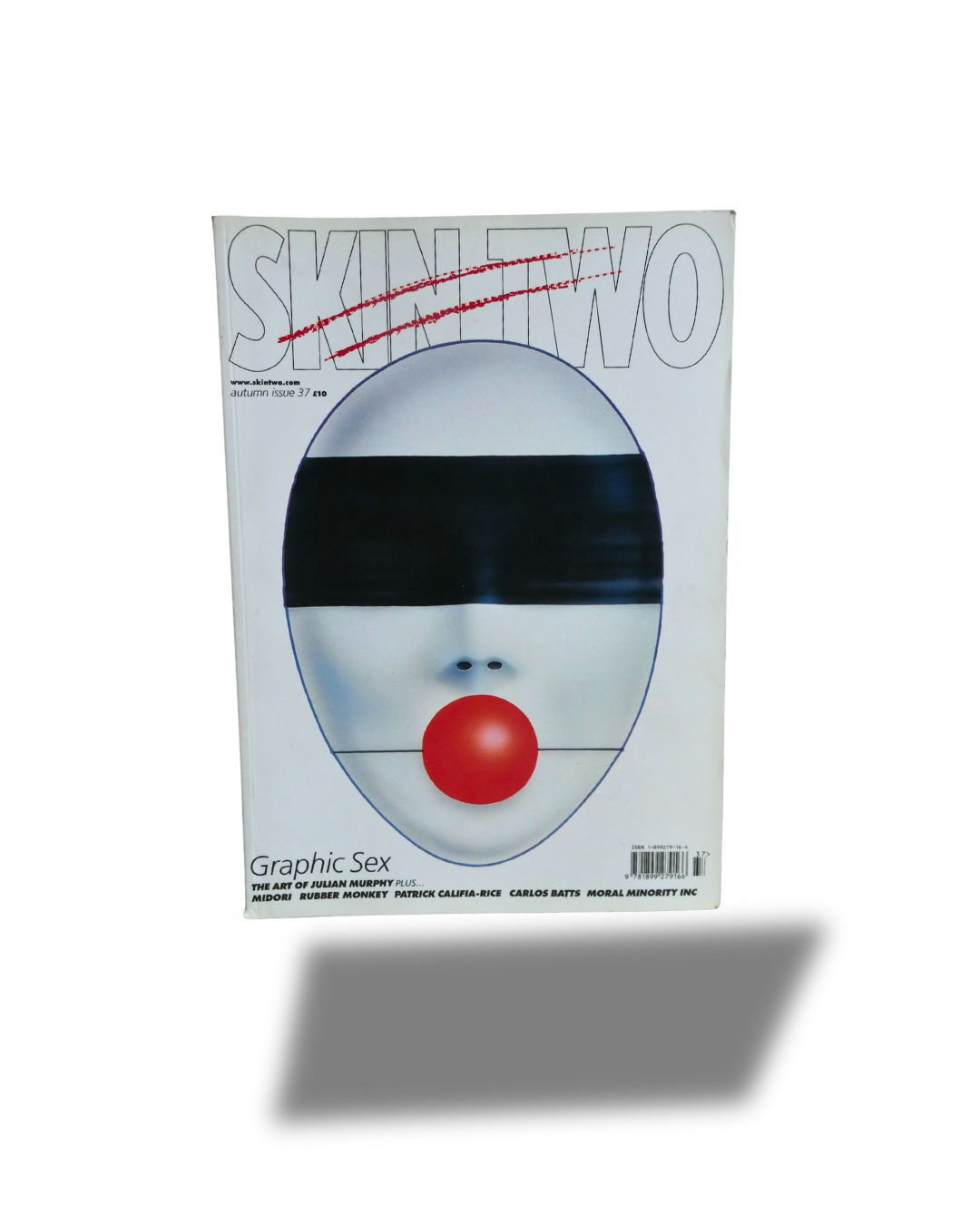 Image 1 of 2
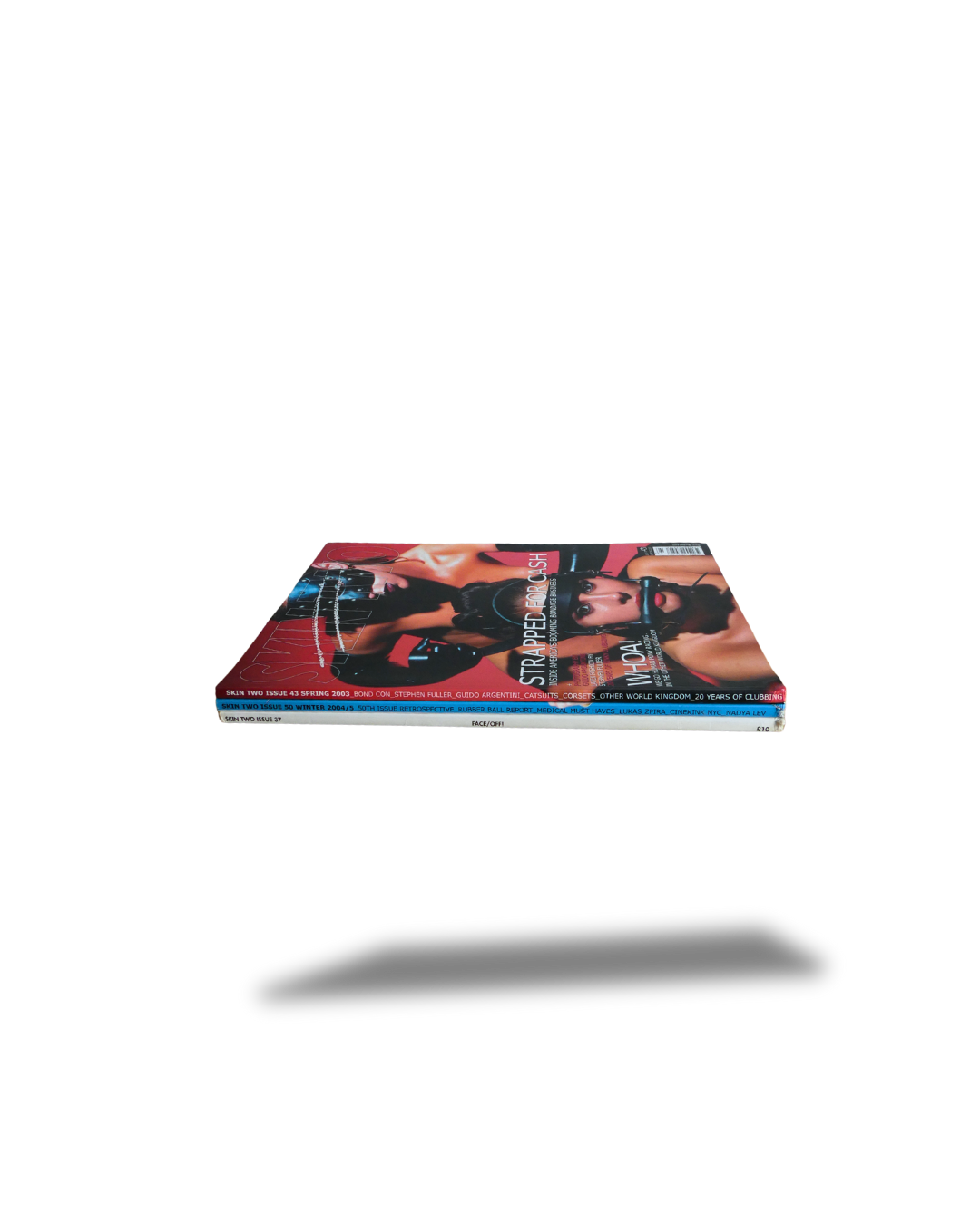 Image 2 of 2